
The Ethics of Racing Horses
I went to the Saratoga race track for the first time this week, on Whitney day. It was one of the most fun events I can remember.
My dad’s side of the family are big gamblers. Some of my earliest holiday memories are the greyhound track and cards around the dinner table. That early influence probably made me more risk-prone, and it left me with a lasting taste for the thrill of trading and, to a lesser extent, gambling. I know it’s negative EV. I still think it has a place as entertainment if you keep in mind that you will eventually lose, and you’re ok with that.
My partner comes from the opposite world. Animal-loving, bleeding-heart, quick to see most human use of animals as abuse, and with far less family history of gambling. She still eats factory-farmed meat without resistance. The outrage seems to spike mainly when the animal is not a farm animal meant for consumption. While visiting my sister in Atlanta we went to the aquarium, and the dolphin show offended her so much we had to step out.
We both really enjoyed the race track. The atmosphere was jovial: people drinking, smoking, relaxing, talking. The horses were gorgeous and impressive. Within minutes of setting up our chairs we were friends with the two older men next to us, who clearly spent a lot of time there. It’s an easy place to make friends if you don’t mind them running older, which I don’t.
The argument
The welfare conversation started when my partner noticed how muscular the horses were, veins bulging across their legs and torso. I said these are top-tier athletes, not unlike football players or bodybuilders whose physiques can look extreme and intimidating.
She held the hard line. Any use of animals for entertainment is unethical because they cannot consent to being trained and raced, no matter how well they are cared for the rest of the time.
I pointed to the reform record. At HISA tracks in 2025 the racing-related fatality rate was 1.04 per 1,000 starts: 176 horses dead or euthanized within 72 hours of racing, across 168,423 starts at 41 tracks. That’s up from the record-low 0.90 in 2024, but roughly half the 2.00 rate when national tracking began in 2009.
The statistic did not move her. For her, the consent objection still decides the case.
I only realized later that no animal can consent to anything. By that metric, any animal confined by humans is unethical. The argument doesn’t stop at the race track. It takes the dog on the couch with it.
Dogs and cats
I brought up pets. They are also kept for companionship, entertainment, status, and emotional support. She felt that was different “because we love them.”
Love is not uniformly present, and it isn’t a welfare metric.
As a former dog owner who walked my dogs every day, gave them an acre of fenced yard, good food, toys, and puzzles, I know we were in a small minority of owners. The average looks much worse. Only a minority of dogs are walked solidly every day, and many owners skip walks entirely. Obesity runs around 60% in large surveys. Painful dental disease is extremely common. In 2025 roughly 5.8 million dogs and cats entered U.S. shelters, with hundreds of thousands euthanized.
There are orders of magnitude more pet dogs and cats than racehorses. Even if only 10-20% of pets live genuinely poor lives, and the chronic-health numbers suggest the real share is larger, the raw count of neglected, under-exercised, abandoned, or discarded animals dwarfs the racehorse population.
Factory farming
Factory farming sits in another league entirely. The overwhelming majority of land animals raised for food live in industrial farms built around confinement, mutilation, and productivity over welfare. These businesses will happily torture millions of animals if it means a fraction of a cent more in profit. Billions of animals per year suffer.
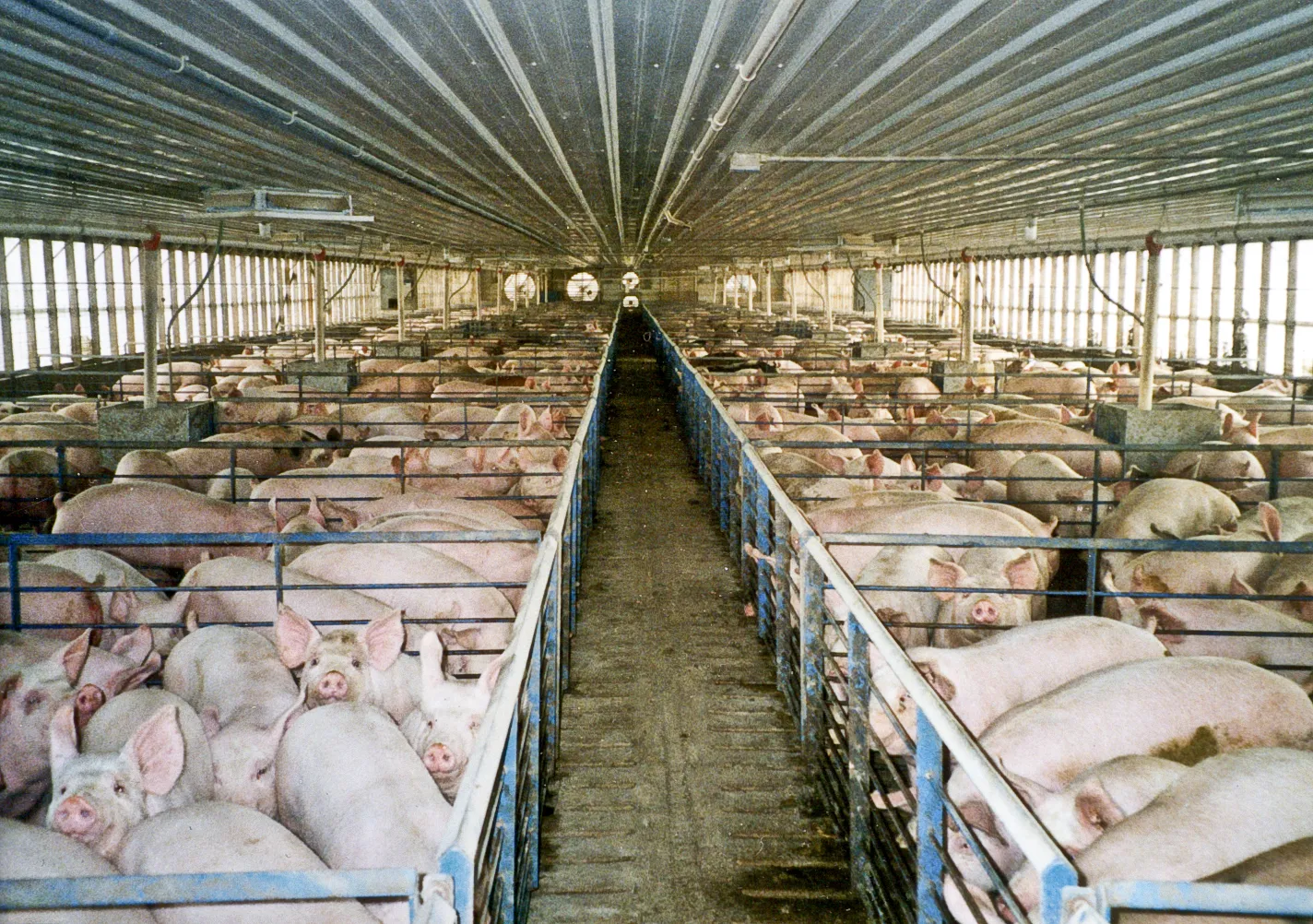
If suffering volume matters, that is the dominant contributor. Selective outrage that treats a racehorse as the moral emergency while treating supermarket meat as background noise is not a consistent ethic.
None of this gives racing a free pass
Breakdowns, short careers, overbreeding, and weak aftercare are real problems. Reforms should continue: safer surfaces, later training, stricter medication and whipping rules, real tracking of horses after they leave the track.
The same standard should apply to pets, meaning exercise, enrichment, and veterinary care. And to farms, meaning an end to the worst confinement, better slaughter, a higher floor.
Responsible use
Humans are going to use animals to some degree, for food, companionship, sport, and other ends. We can and should make that use humane. Reduce avoidable suffering wherever we can, while still letting people enjoy a burger or a day at the races when the animal on the other side is not being tormented.
Any solution like “just don’t eat meat” fails to grasp human behavior. It sets a goal that will never be achievable, and in the meantime it still allows animals to be abused.