Haydrops: Build Tools, Not Empires
1. Why Haydrops Exists
Haydrops wasn’t meant to be a standalone product.
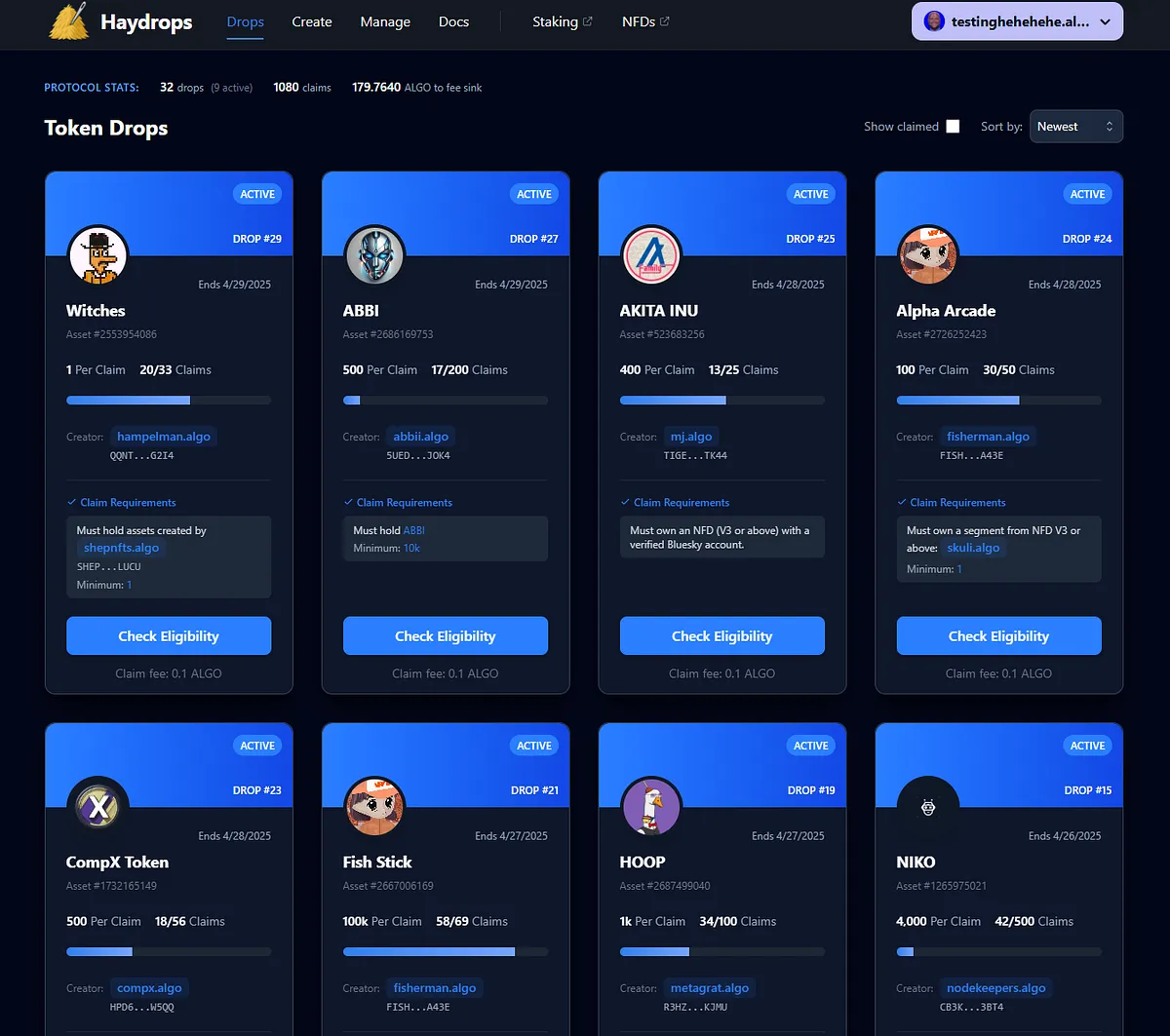
While building our upcoming app, we knew we wanted users to claim airdrops directly within the app— but we didn’t want to control who could create these drops or gatekeep the process. So we designed something open and permissionless instead.
In just one week at the Algorand Developer Retreat, we developed the smart contract. The following week, we vibe-coded the front-end. Two weeks later, drops.hay.app was live.
Now, anyone can create a drop. Anyone can claim. And any developer can integrate these features into their own applications utilizing the open-source smart-contract.
No walled garden. No backend or administrative bottlenecks. Just a small, flexible piece of composable infrastructure that anyone can use.
2. Design Philosophy: The Réti Template
The same core ideas that made Réti Pooling successful (in our opinion) — low-cost, decentralized, permissionless, configurable — are all baked into Haydrops.
We don’t think you need to control everything to make it valuable. In fact, we think the opposite. The less you gatekeep, the more you open up space for creativity, and for others to build upon your creation. You often cannot anticipate how others will utilize an open protocol.
A perfect example of this is the Algotardio No-Loss Lottery. They built a staking lottery protocol and used Réti as a piece of the infrastructure.
Another good example is Kiln using Réti to manage it’s institutional stake. If the protocol had a fee or wasn’t decentralized / wasn’t open-source, it’s very unlikely they would be using it.
So with Haydrops, we wanted to:
- Make it as cheap as possible
- Make it as configurable as possible
- Make it as permissionless and decentralized as possible
3. Fees as Incentives
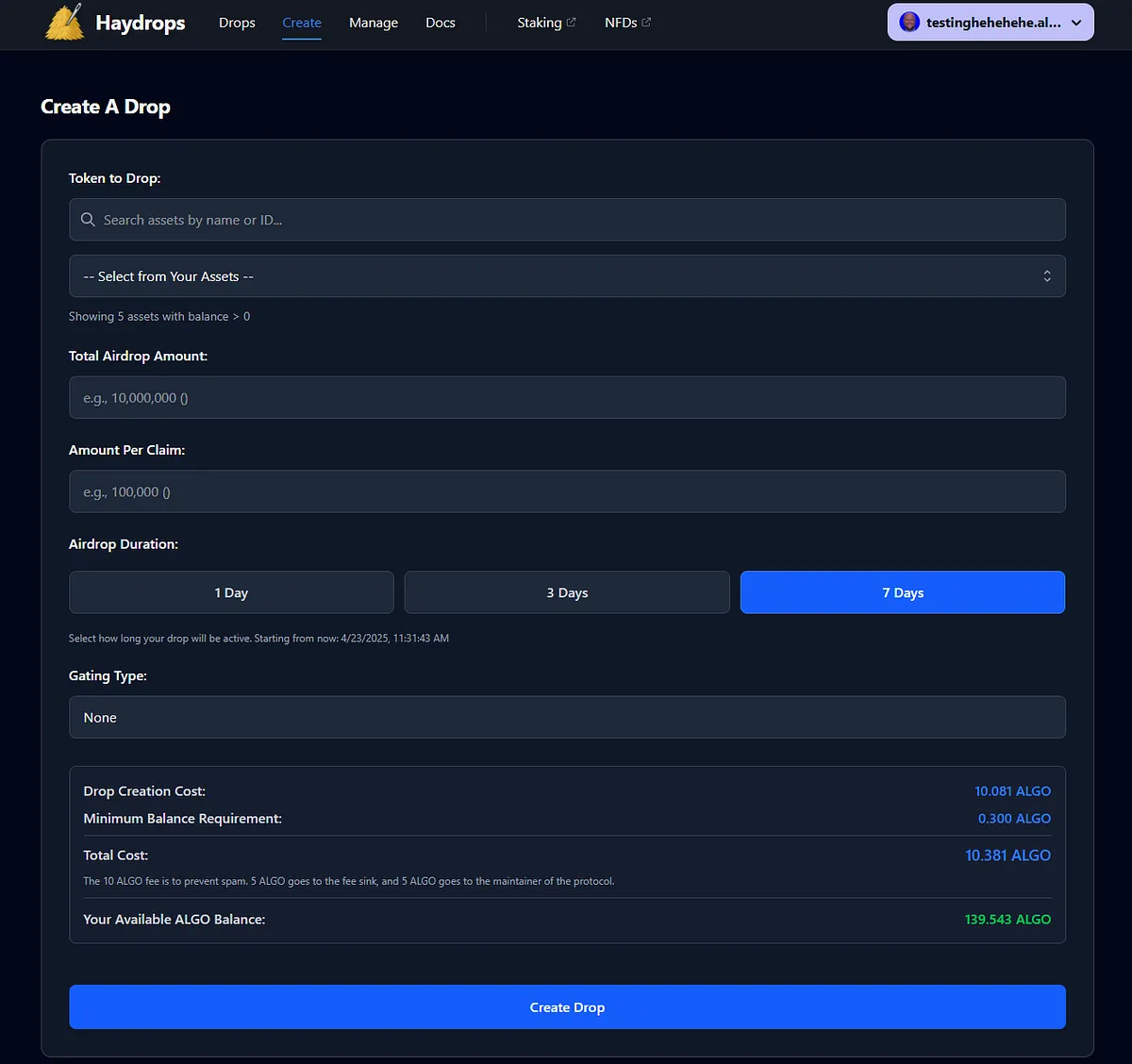
Every action on Haydrops has a fee associated with it.
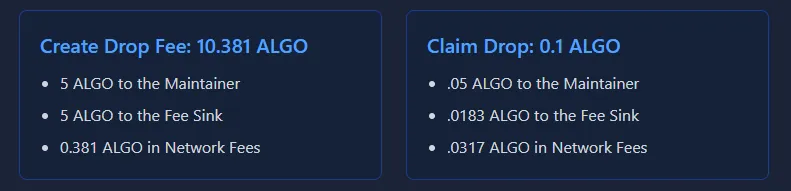
We use fees to:
- Incentivize good behavior (not spamming low-value drops)
- Cover the cost of the platform (TxnLab is the current maintainer)
- Contribute to the sustainability of Algorand
5 ALGO from every create and .0183 ALGO from every claim goes directly to the fee sink.

In the Réti Protocol, new Validators incur a 10 ALGO fee sent directly to the fee sink. This is similarly to prevent spamming the dashboard with Validators who aren’t serious about running a node. However it also helps contribute to the overall fees generated on Algorand. This ensures alignment between the users of the protocol and the users of the network. No one needs to feel bad about paying fees if they know that the fees come back to them as staking rewards.
4. Gating That Matters
Right now, Haydrops supports a handful of gating types. All of them are built to reward the users that creators want — and to make sybil attacks expensive or outright unprofitable.
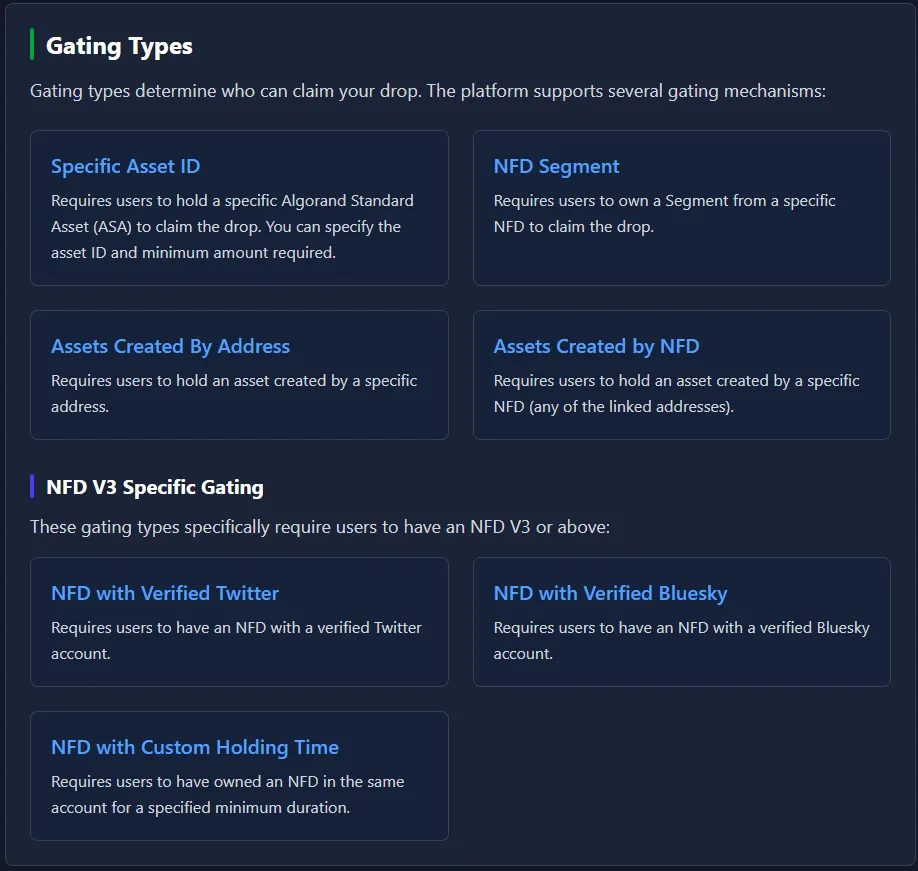
The strongest of these, in our view, is minimum duration of NFD ownership.
- If you transfer the NFD, the clock resets
- If you want to farm it, you’ll need a lot of NFDs, each held in different accounts, held for a long time
- And crucially, the NFD must be upgraded to v3, which has a yearly renewal fee
That means a sybil attacker can’t just spin up a bunch of wallets and start doing this. They’d have to buy NFDs, pay to upgrade them, and sit on them for potentially years. Suddenly there’s real cost, real time, and real risk.
For a typical user? $6/year for an NFD isn’t a huge deal, especially if you use it as your brand or online identity. You may be able to earn that back through airdrops, but it’s not guaranteed. That’s kind of the point, make trying to sybil more of a gamble for the attacker.
5. A Protocol with a Point
Haydrops wasn’t meant to be a product. It became one because we needed infrastructure and decided to build it and release it to everyone.
The goal was simple: create a drop protocol that’s as flexible, open, and chain-aligned as possible — and let users do the rest. No lock-in, no capture, no empire-building. Just a tool with the right values baked in.
As we hinted on Twitter, Haydrops is just an appetizer for a bigger application we’re building. We can’t wait to share it with you! Stay tuned.
Links to our other projects:
This piece originally appeared on Medium .